
When Is the Right Time to Plan for Care Fees?
Planning for care fees might not top your to-do list, but starting early gives you more control and peace of mind. No matter your age, the best time to plan is now.
In this friendly guide, we’ll explore why planning matters, what options are available, and how the best approach varies depending on your stage of life.
Why Planning for Care Fees Matters
Care home fees can be surprisingly high. In many places, residential care can cost tens of thousands per year, and specialist nursing or dementia care often costs even more. Without a plan, families can find themselves making rushed decisions under emotional pressure — sometimes selling a home or dipping into savings far faster than expected.
Planning ahead helps you:
- Protect your assets and savings.
- Maintain more control over the type and quality of care you receive
- Reduce stress and uncertainty for your loved ones.
- Take advantage of financial products or strategies that work best over time.
The good news? You don’t need all the answers right away. Starting the conversation now gives you more control, clarity, and peace of mind later.
Key Features: Best Times to Plan
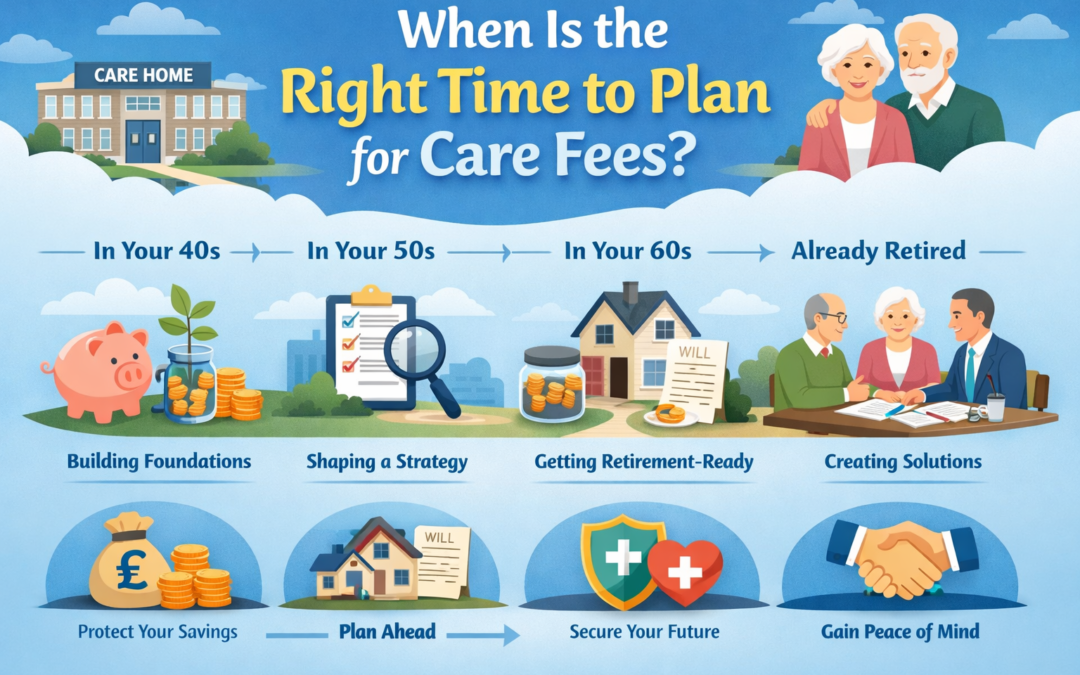
Here are the main life stages when planning for care fees can be especially helpful:
- In your 40s – Building early awareness and long-term financial foundations
- In your 50s – Reviewing assets and shaping a more defined strategy.
- In your 60s – Refining plans as retirement approaches
- Already retired – Creating realistic short- and medium-term care funding options.
Let’s look at each stage in more detail, so you can identify your current priorities and next steps.
Planning in Your 40s: Laying the Groundwork
In your 40s, care fees probably feel like a far-off concern. You may be focused on your career, raising a family, paying off a mortgage, or building up your pension. Even so, this is one of the most powerful times to begin planning.
At this stage, you can:
- Build healthy savings habits.
- Maximise pension contributions
- Start thinking about long-term financial goals.
- Explore insurance or investment products designed for later-life care.
- Put basic legal documents in place, such as a will.
You don’t need a separate care fund yet. Instead, focus on flexible finances by avoiding unnecessary debt, protecting your income, and growing your investments. These smart choices give you more options later.
Think of it like planting a tree. You won’t see the shade straight away, but when you need it, you’ll be glad it’s there.
Planning in Your 50s: Shaping a Clearer Strategy
Your 50s are often a turning point. Retirement starts to feel real, and you may have more clarity about your lifestyle goals and financial position. This is a great time to bring care fees into your broader retirement planning.
During this phase, you can:
- Review your pensions, savings, and investments.
- Estimate your potential care needs and costs.
- Consider how property might factor into future funding.
- Speak with a financial adviser about care planning options.
- Explore trusts, insurance, or care savings products.
You may also be supporting ageing parents at this point, which can provide practical insight into how care systems work and what the costs are.
By planning in your 50s, you can make thoughtful decisions without rushing and still adjust your strategyasf circumstances change.
Planning in Your 60s: Getting Retirement-Ready.
In your 60s, as you approach or begin retirement, it is crucial to focus on care fee planning.s.
At this stage, your plan can become more concrete. You might:
- Review how your retirement income could support future care.
- Decide how much of your savings you’d like to ring-fence.
- Explore immediate or deferred care fee funding products.
- Put in place lasting powers of attorney.
- Update your will and estate plans.
Your health and lifestyle may also influence your decisions. Some people choose to downsize their home, freeing up capital that can later be used for care. Others prefer to stay put and use equity release or savings if care becomes necessary.
The goal isn’t perfect prediction, but creating a flexible plan for changing needs.
Planning When Already Retired: It’s Never Too Late
If you’re already retired and haven’t yet planned for care fees, don’t worry — it’s still absolutely possible to put a meaningful strategy in place.
In fact, many people only begin thinking seriously about care when they’re in their 70s or 80s. While your options may be slightly narrower than they were earlier, there are still effective ways to manage costs.
You might consider:
- Using savings or investments to cover care expenses
- Exploring immediate care fee annuities
- Looking into equity release or downsizing
- Understanding what support or funding may be available
- Working with a specialist adviser to structure payments
The most important step is simply to start the conversation. Even a basic plan can make a huge difference to your comfort and confidence. Key takeaway: Action, no matter how small, brings benefits.
Who Is This For?
This guidance is for anyone who wants to prepare for care home fees, whether for themselves or a loved one. That includes:
- People in their 40s, 50s, or 60s are planning ahead.
- Retirees are thinking about long-term care.
- Families supporting older relatives.
- Homeowners are considering how their property fits into future care plans.
- Anyone who values peace of mind and financial security.
You don’t need to be wealthy to benefit from planning. Care fees affect people across all income levels, and thoughtful preparation can help protect what you’ve worked hard to build. Key takeaway: Everyone benefits from advance planning, regardless of income.
Common Myths About Care Fee Planning
“I’ll deal with it if it happens.”
This is understandable, but it often leads to rushed decisions and fewer options. Planning early gives you flexibility.
This is understandable, but it often leads to rushed decisions and fewer options. Planning early gives you flexibility.
“The government will pay for my care.”
Public funding is usually means-tested. Many people end up paying all or most of their care costs out of pocket.
Public funding is usually means-tested. Many people end up paying all or most of their care costs out of pocket.
“I’m too young to think about this.”
There’s no such thing as too young — only too late. Early planning doesn’t lock you into anything; it simply creates options.
There’s no such thing as too young — only too late. Early planning doesn’t lock you into anything; it simply creates options.
“It’s too complicated.”It can feel that way, but you don’t have to do it alone. A good adviser can simplify the process and explain your choices clearly. Key takeaway: Professional support can ease the process.
How to Get Started
You don’t need a perfect plan straight away. Start with small, manageable steps:
- Take stock of your finances.
List your savings, pensions, property, and other assets. - Think about your preferences.
Would you prefer home care or a care home? Do you want to protect a certain amount of your estate? - Talk to your family.
Open conversations now can prevent stress and misunderstandings later. - Seek professional advice.
A financial adviser who specialises in later-life or care planning can guide you through your options. - Review regularly. Your plan should evolve as your life, health, and finances change. Key takeaway: Review plans regularly for continued effectiveness.
The Bottom Line
So, when is the right time to plan for care fees?
- In your 40s: You’re building foundations.
- In your 50s: You’re shaping a clear strategy.
- In your 60s: You’re refining and preparing.
- Already retired: You’re creating realistic solutions.
There’s no single perfect moment—the best time is the one you choose to start. Don’t wait; start today.t.
Planning for care fees isn’t about being pessimistic. It’s about being prepared, protecting your independence, and giving yourself and your loved ones peace of mind.
Take action today—commit to a better future for yourself.