
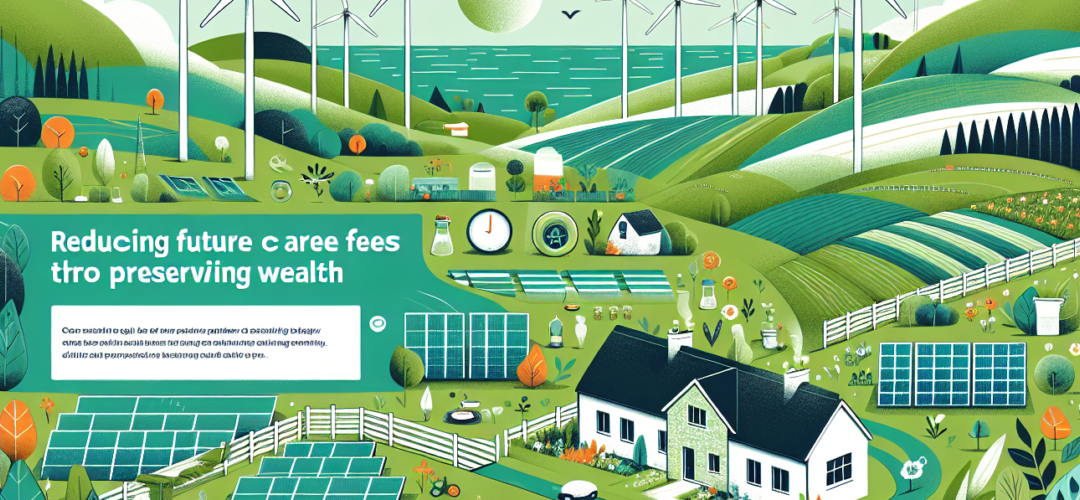
In an era marked by increasing awareness of environmental sustainability, making eco-friendly lifestyle choices is not only beneficial for the planet but can also have a significant positive impact on your financial future. For homeowners and families in England and Wales, adopting sustainable living practices can help reduce future care home fees, a concern that becomes increasingly pressing as one ages. This article explores the intersection of sustainable living and financial planning for long-term care, offering practical and environmentally friendly strategies to help preserve family wealth.
The Financial Implications of Care Home Fees
As people age, the prospect of moving into a care home becomes a reality for many. In England and Wales, care home fees can be substantial, often reaching several thousand pounds per month, depending on the level of care required. With services such as personal care, nursing, accommodation, meals, and medication management, the costs can quickly accumulate.
According to recent statistics, the average annual cost of a care home in the UK is over £33,000, with rates significantly higher for more advanced or specialised care. Such expenses can rapidly deplete an individual’s savings, impacting the inheritance left for family members. This is where effective planning and sustainable living can intersect to mitigate these costs.
Sustainable Living: An Eco-Friendly Strategy to Preserve Wealth
Sustainable living involves making conscious decisions that reduce your environmental impact. Simultaneously, these choices can lead to financial savings that can be applied towards future care costs. Here are some eco-friendly strategies to consider:
- Energy Efficiency: Upgrading your home with energy-efficient appliances and LED lighting can significantly reduce your utility bills. Installing solar panels may require upfront costs but can lead to long-term savings on energy, which can be redirected towards care home fees.
- Water Conservation: Implementing water-saving measures such as low-flow showers and dual-flush toilets can lower water bills. Consider rainwater harvesting systems for garden irrigation, further cutting costs.
- Waste Reduction: Adopting recycling and composting practices reduces waste management costs and contributes to a more sustainable future.
- Transportation: Opting for public transportation, cycling, or electric vehicles can decrease fuel expenses and reduce your carbon footprint.
By adopting these strategies, not only do you contribute to a healthier planet, but you also free up financial resources that can be strategically planned for future financial obligations, such as care home fees.
Strategic Financial Planning for Care Home Fees
When it comes to planning for potential care home fees, strategic financial and legal planning is crucial. The Care Home Fees Guide | Protect Your Family & Assets England and Wales offers a range of services to help families navigate these financial challenges effectively.
Key strategies include:
- Asset Protection Trusts: These legal entities can safeguard your assets from being entirely consumed by care costs, ensuring some wealth is preserved for heirs.
- Wills and Estate Planning: Proper will drafting and estate planning can make a significant difference in how assets are managed and distributed after death, potentially reducing tax liabilities.
- Equity Release: This option allows homeowners to unlock the value of their property to cover care home expenses without having to sell their home outright.
Understanding how care fees work and exploring funding options with professional advice can prevent the depletion of family assets.
Eco-Friendly Home Modifications and Their Long-Term Benefits
Investing in sustainable home modifications not only enhances the property’s value but can also make a significant difference in future financial planning for care. Here’s how:
- Insulation and Glazing: Proper insulation and double or triple glazing improve energy efficiency and lower heating bills, contributing to long-term savings.
- Smart Home Technology: Smart thermostats and home automation systems optimise energy use, reduce costs, and offer comfort and convenience as one ages.
These modifications can lead to a potential increase in property value, providing more leverage if considering equity release options in the future.
The Role of Professional Guidance in Sustainable Wealth Management
To effectively integrate sustainable living with financial planning, consulting with professionals is paramount. The Care Home Fees Guide | Protect Your Family & Assets England and Wales can provide valuable advice on asset preservation, long-term care planning, and more.
Professional guidance ensures that:
- You are fully informed about care home financial obligations and how best to plan for them.
- Your choices in sustainable living align with legal and financial strategies for asset protection.
Moreover, such guidance integrates a holistic approach to both financial health and environmental responsibility, ensuring peace of mind for families planning for the future.
In conclusion, sustainable living offers a dual benefit of contributing positively to the planet while significantly impacting personal financial planning. By integrating eco-friendly practices into daily life and engaging in strategic financial planning, individuals and families in England and Wales can effectively reduce future care home fees, ensuring that family wealth is preserved for future generations.
For more information on asset protection and care home fee planning, visit the Care Home Fees Guide | Protect Your Family & Assets England and Wales.
Get in Touch
Struggling with care home fees? Get in touch today for friendly, expert support.
Call us: 0191 603 0221
Visit: Care Home Fees Guide
